

Dental implants are a long-lasting way to replace missing teeth. This guide will walk you through what dental implants are, the step-by-step process, the benefits, typical costs, and local options for dental implants in Atlanta, GA. Read on to learn practical next steps and what to expect at your first visit.
Whether you’re missing one tooth or planning full-arch restoration, this guide is for anyone considering dental implants in Atlanta, GA and who wants clear, easy-to-follow information.
What Are Dental Implants?
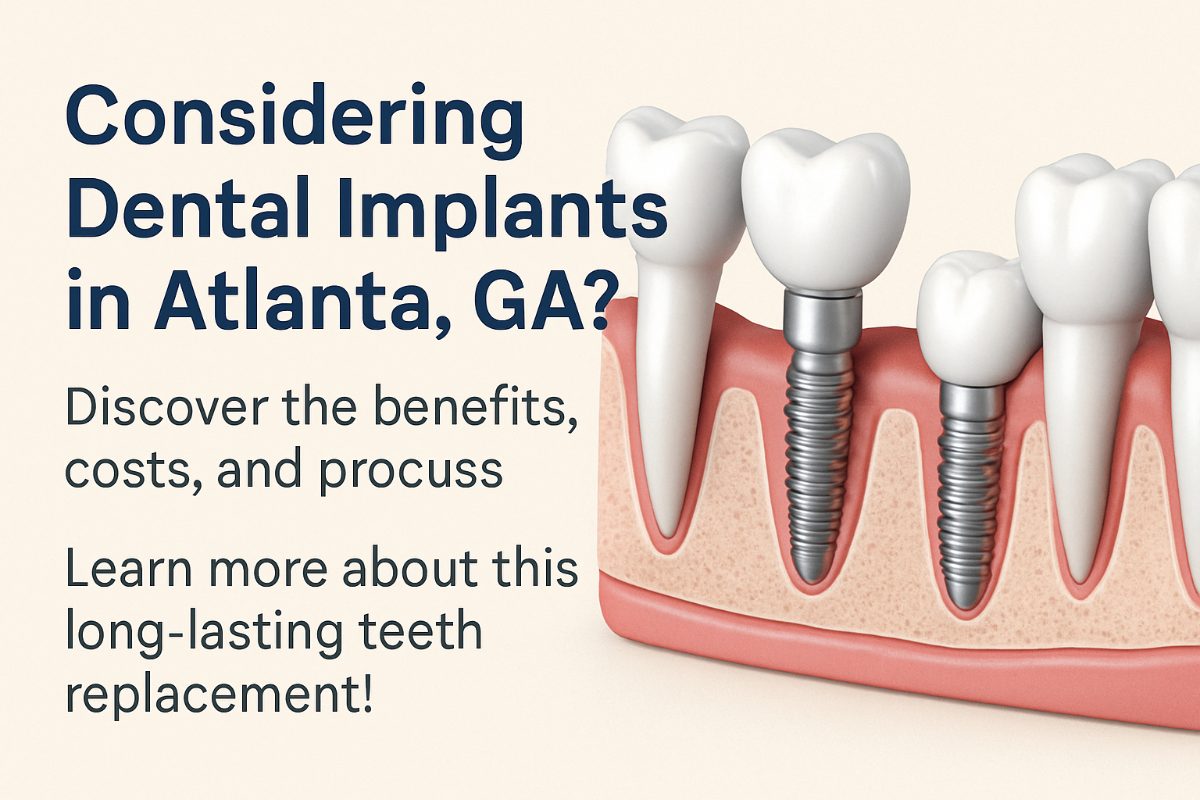
Dental implants are artificial tooth roots made of titanium or similar materials that are placed into the jawbone. A complete implant restoration has three main parts:
- Implant fixture: the screw-like post anchored in the bone.
- Abutment: the connector that links the implant to the crown or denture.
- Crown or prosthesis: the visible tooth or bridge that attaches to the abutment.
Unlike bridges, implants don’t rely on nearby teeth for support. Compared with removable dentures, dental implants in Atlanta, GA feel and function more like natural teeth and help preserve the jawbone.
Key Benefits of Dental Implants in Atlanta, GA
- Improved chewing and clearer speech compared with loose dentures.
- Bone preservation — implants stimulate the jaw and slow bone loss.
- A natural appearance that matches your smile.
- Long-term durability when cared for properly — many implants last decades.
- Better overall oral health because implants don’t require altering adjacent teeth.
Patients often report major quality-of-life improvements after getting dental implants in Atlanta, GA: more confidence eating in public, less worry about denture slippage, and a more youthful facial profile. With good oral hygiene and regular dental visits, implant restorations commonly last 15–30 years or more.
The Step-by-Step Process for Dental Implants in Atlanta, GA
Initial consultation and evaluation
Your first visit typically includes a dental exam, health history review, and 3D imaging (CBCT) to evaluate bone and anatomy. The dentist will create a personalized treatment plan, discuss timelines, and review sedation options. Expect a clear outline of costs and next steps.
Preparatory treatments (if needed)
Some patients need preparatory work before implant surgery, such as:
- Bone grafts to rebuild bone volume
- Tooth extractions for damaged teeth
- Sinus lifts for upper-jaw implants
These procedures add healing time, so the overall timeline varies depending on your needs.
Implant placement surgery
On surgery day, the implant fixture is placed into the jawbone. Local anesthesia and sedation options are available to keep you comfortable. The procedure can take one to several hours depending on how many implants are placed.
After surgery, you’ll get instructions for pain control, oral hygiene, and diet during the early healing phase.
Healing and osseointegration
Osseointegration is the process where the bone fuses to the implant. This typically takes 3–6 months. You’ll have follow-up visits to monitor healing and ensure the implant is stable. Signs of proper integration include reduced soreness, firm implant stability, and healthy gum tissue.
Final restoration
Once healed, your abutment and crown (or denture) are placed. Options may include same-day crowns using CEREC or custom restorations from an on-site lab for a precise fit and color match. Final adjustments ensure comfort and proper bite alignment.
Who Is a Good Candidate — and Alternatives
Good candidates for dental implants in Atlanta, GA generally have:
- Good overall health and controlled chronic conditions
- Sufficient jawbone or willingness to undergo grafting
- Non-smokers or willingness to quit during healing
- Commitment to daily oral hygiene and regular dental visits
Alternatives include fixed bridges, partial dentures, and full dentures. Bridges can work for single missing teeth but may require altering adjacent teeth. Removable partials and full dentures cost less upfront but can feel less stable and may accelerate bone loss over time.
Costs, Insurance, and Financing for Dental Implants Near Atlanta, GA
Costs vary based on:
- Number of implants and type of restoration (single crown, bridge, full-arch)
- Need for bone grafts or sinus lifts
- Type of implant system and materials
- Use of sedation and imaging
Many dental insurance plans cover parts of implant treatment but often exclude full coverage for implants. Verify benefits before treatment and ask your provider for a pre-treatment estimate.
Financing options commonly available for dental implants near Atlanta, GA include CareCredit®, Proceed Finance, Sunbit, and in-house plans like the practice’s “Signature Solution.” Some practices offer lifetime warranties on select treatments if patients follow care guidelines. Ask about flexible payment plans and whether a replacement option is included for certain failures.
Why Choose Artistic Dentistry of Atlanta for Dental Implants in Atlanta, GA
Artistic Dentistry of Atlanta has provided patient-centered care since 1997 under Dr. Peter Vanstrom, with associate Dr. Sharon Lee. Together they offer over 30 years of clinical experience and a full-service, spa-like facility. The practice features an on-site artisan dental laboratory, CEREC same-day crowns, advanced implant systems, and laser dentistry for soft tissue care.
They accept most major insurances and offer third-party financing (CareCredit®, Proceed Finance, Sunbit), plus an in-house “Signature Solution” membership with discounts for uninsured patients. Select treatments may come with a lifetime warranty when patients follow recommended care.
Ready to learn more? To schedule a consultation for dental implants in Atlanta, GA, call the office or request an appointment online. For your first visit bring a photo ID, list of medications, dental insurance card (if any), and any recent dental records or X-rays you can provide. The consultation will cover your health history, imaging, and a clear treatment plan tailored to your needs.